


Table of Contents
- Why UPF Clothing Matters for Coastal Anglers
- Quick Comparison: Top Picks for Saltwater Protection
- BAY FLATS Airflow Fishing Hoodie: Best Overall Value
- BAY FLATS Airflow Waypoint Hooded Shirt: Best for Guides
- BAY FLATS Bamboo Blend Fishing Hoodie: Best for Layering
- BAY FLATS Airflow Drifter Performance Pant: Full-Leg Coverage
- BAY FLATS Pearl Snap and Buttondown Options
- Huk vs AFTCO Fishing Apparel: What to Know Before You Buy
- Frequently Asked Questions
Last Updated: September 12, 2026
Why UPF Clothing Matters for Coastal Anglers
Coastal anglers face some of the harshest sun exposure of any outdoor group. Water reflects ultraviolet radiation from above and below, and a full day on the flats or offshore compounds that exposure hour after hour. UPF clothing is the most reliable defense, blocking UVA and UVB rays with fabric instead of sunscreen that washes off, sweats away, or needs reapplying every two hours. According to the Skin Cancer Foundation's sun protection guidance, clothing is the first line of defense against skin cancer, and UPF-rated fabric delivers consistent protection that sunscreen alone cannot match.
At Bay Flats Apparel, we build gear for anglers who spend long days in salt, sun, and spray, where protection and breathability have to work together. This guide ranks the best UPF clothing for coastal anglers, from hooded sun shirts to full-leg performance pants, with the specific features that matter on the water.
Quick Comparison: Top Picks for Saltwater Protection
The best UPF clothing for coastal anglers combines high ultraviolet protection factor, moisture-wicking fabric, and salt-water resistance in a fit that allows full casting mobility. Here is how the top BAY FLATS options compare:
Product |
Price |
Protection |
Best For |
|---|---|---|---|
$65.00 |
UPF-rated Airflow fabric |
Overall value |
|
Airflow Waypoint Hooded Shirt |
$95.00 |
UPF-rated Airflow fabric |
Guides and heavy rotation |
Bamboo Blend Fishing Hoodie |
$75.00 |
UPF 30+ |
Layering |
Airflow Drifter Performance Pant |
$95.00 |
Full-leg coverage |
Wade and boat days |
Long Sleeve Airflow Pearl Snap |
$95.00 |
UPF 30+ |
Lodge and town wear |
BAY FLATS Airflow Fishing Hoodie: Best Overall Value
The Airflow Fishing Hoodie is the best value in coastal sun protection at $65.00. It pairs breathable, moisture-wicking fabric with thumbhole cuffs and a crossover collar, so your hands, wrists, and neck stay covered while you cast. The long-sleeve sun hoodie design blocks UVA and UVB rays across the arms and shoulders, the areas most exposed during a day on the flats.


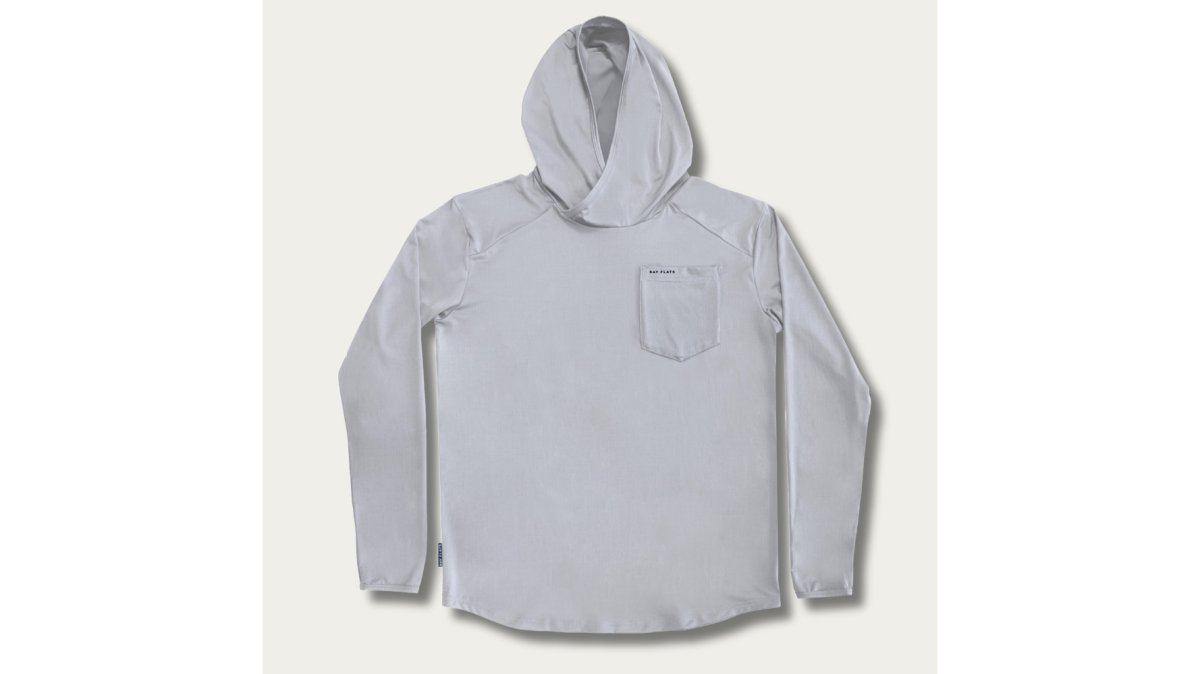
BAY FLATS Airflow Fishing Hoodie
Pros and Cons
- Pros: Lightweight, quick-dry, and breathable enough for tropical climate heat; thumbholes and crossover collar extend coverage; strong price for a technical hoodie.
- Cons: No UPF number published for this specific piece, and the relaxed hood can flap in strong wind.
American Academy of Dermatology sun protection tips
BAY FLATS Airflow Waypoint Hooded Shirt: Best for Guides
Guides who are on the water hundreds of days a year need a shirt that stays buttoned, stays breathable, and holds its shape from first run to last cast. The Waypoint Hooded Fishing Shirt was shaped by guide feedback and built from the same Airflow fabric trusted in the Pearl Snap, then opened up for a looser fit with two breast pockets and a zippered stash pocket. At $95.00, it is the most capable option for professional, client-facing work.

BAY FLATS Airflow Waypoint Hooded Fishing Shirt
Pros and Cons
- Pros: Extremely lightweight, fast-drying, and structured enough to wear buttoned; utility pockets for guides carrying tools and licenses.
- Cons: The premium price reflects the guide-grade build, and the loose fit runs large for casual wearers.
BAY FLATS Bamboo Blend Fishing Hoodie: Best for Layering
For variable coastal weather, the Bamboo Blend Fishing Hoodie is the layer you can live in. Its bamboo-rich blend feels cool and quiet against the skin, and the UPF 30+ rating, thumbholes, and stay-put crossover hood keep you covered without feeling overbuilt. At $75.00, it works as a base layer under a shell or on its own during a mild morning run, which makes it the most flexible piece in a coastal layering system.
Pros and Cons
- Pros: Soft, quiet fabric; UPF 30+ protection; lightweight enough for travel and skiff days.
- Cons: Bamboo blends need gentler washing than straight synthetics, and the lighter build is not meant for heavy spray.
BAY FLATS Airflow Drifter Performance Pant: Full-Leg Coverage
Shorts on the salt usually end in sunburn by noon. The Airflow Drifter Performance Pant exists for that mistake. Built from Airflow fabric, it moves air, dumps heat, and dries fast enough to keep pace with a wet boat deck. At $95.00, it delivers full-leg coverage without the weight, which matters for wade fishing and long afternoons under direct sun.
Why Full-Leg Coverage Wins on the Coast
Water reflects UV from below as well as above, so the backs of your legs and knees take a beating that a shorts-and-sunscreen routine never fully addresses. Long pants also protect against the two other coastal hazards most sun guides ignore: oyster shell and dock hardware abrasion, and the biting insects that show up at the marsh edges on a falling tide. A performance pant with a UPF-rated weave, a gusseted crotch, and articulated knees gives you casting mobility without the coverage penalty.
Salt-Spray and Corrosion Resistance in a Pant
The features that matter most on a saltwater pant are not visible in a product photo:
- Quick-dry synthetic weave so the pant is not still damp at the ramp the next morning.
- Non-corrosive hardware, plastic or coated snaps and zippers that will not seize after a season of spray.
- Reinforced seat and knees to survive sliding across a wet cooler lid or a skiff gunwale.
- A cut that drains, no deep cuffs that hold water and salt against your ankles for hours.
Rinse the pant in fresh water after every trip. Salt left in the weave stiffens fabric, dulls color, and shortens the life of any DWR finish.
Layering for Variable Coastal Weather
Coastal fishing rarely holds one temperature. A pre-dawn run to the flats can start in the low 60s and finish near 90, and the wind picks up the moment you clear the mangroves. A practical layering system looks like this:
- Base layer: a lightweight UPF hoodie or bamboo-blend layer against the skin for moisture management and core sun protection.
- Mid layer: the Drifter Performance Pant or a long-sleeve buttoned shirt for coverage and light warmth.
- Shell: a packable wind or spray layer for the run out and the run home, stowed once you are on the flat.
The goal is to add and remove protection without ever exposing bare skin to the sun. That is the piece most UPF guides miss, they treat sun protection as a single garment decision when it is really a system you adjust all day.
Fit and Mobility for Casting
Look for a gusseted crotch, articulated knees, and a waistband that stays put when you crouch to net a fish or step off a poling platform. A pant that binds at the hip will not survive a full day of casting, no matter how good the UPF rating is.
Key TakeawayFull-leg UPF coverage is not just about sun. On the coast it also buys you abrasion resistance, insect protection, and a layer you can adjust as the day warms, which is why a performance pant belongs in every coastal angler's kit, not just the wade-fishing crowd.
BAY FLATS Pearl Snap and Buttondown Options
Not every day on the water calls for a hoodie. The Men's Long Sleeve Airflow Pearl Snap Shirt ($95.00) brings UPF 30+ sun protection and stretch to a classic working silhouette, while the Short Sleeve Performance Buttondown ($85.00) adds mesh-lined vents, underarm eyelets, and a hidden zippered pocket for hot, still days. The Ladies Short Sleeve Performance Buttondown ($85.00) offers the same sun-shielding poly-spandex build with princess seams for a tailored fit.
Huk vs AFTCO Fishing Apparel: What to Know Before You Buy
The Huk vs AFTCO fishing apparel debate comes down to fit, fabric weight, and how hard you use the gear. Huk leans toward athletic, performance-first cuts, while AFTCO is known for technical fishing features and tournament heritage. Both make solid UPF 50+ performance fishing shirts. But the comparison most coastal anglers actually need is not brand-versus-brand, it is fabric-versus-saltwater, because the shirt that fails you on the flats rarely fails from sun exposure. It fails from salt.
What UPF Actually Measures (and What It Doesn't)
UPF, or ultraviolet protection factor, is a fabric rating, not a sunscreen rating. A UPF 50 fabric blocks roughly 98% of UV radiation; UPF 30 blocks about 96%. Those numbers are measured on new, dry, unstretched fabric in a lab. On the water, three things degrade that rating: stretching (a wet, tight-fitting knit can lose a meaningful share of its protection), repeated laundering, and salt crystallization that abrades fibers over time. That is why a UPF 50+ label is a starting point, not a guarantee. Look for dense weave, tight knit construction, and dark or saturated dyes, all of which hold protection better than loose, pale, thin fabric.
Salt-Spray and Corrosion Resistance: The Gap Most Guides Skip
Most UPF guides stop at the sun. Coastal anglers need to know how a fabric behaves after the twentieth saltwater soak. A few practical patterns hold up:
- Solution-dyed synthetics (polyester and nylon) resist fading and UV degradation better than piece-dyed fabric because the color is set in the fiber, not painted on the surface.
- DWR (durable water repellent) finishes shed spray and light rain, but they wear off. Salt crystals left to dry in the weave physically abrade the finish and the fiber, which is why a fresh-water rinse after every trip matters more than any single fabric choice.
- Zippers, snaps, and grommets are the first metal to corrode. Non-corrosive hardware (plastic, anodized aluminum, or marine-grade stainless) outlasts cheap nickel-plated zippers in a salt environment every time.
- Flatlock seams reduce chafe and eliminate the raised stitch lines where salt collects and fabric stiffens.
Fit and Mobility for Casting
A sun shirt that binds at the shoulder is a sun shirt you take off by 10 a.m. For fly and spin casting, prioritize four-way stretch, a raglan or gusseted sleeve, and enough length in the body that the hem stays tucked when you reach overhead. Athletic cuts (Huk's default) suit leaner frames and high-output movement; relaxed cuts (AFTCO's tournament silhouettes and the BAY FLATS Waypoint) suit broader frames and all-day wear. Neither is wrong, the wrong choice is buying a cut that fights your casting stroke.
How to Choose the Right UPF Rating
Situation |
Minimum Rating |
Why |
|---|---|---|
Short, shaded, early-morning trips |
UPF 30 |
Adequate for low-angle sun |
Full day on open water or flats |
UPF 50 |
Water reflection compounds exposure |
Offshore, high altitude, or fair skin |
UPF 50+ with hood and gaiter |
Maximum coverage where reapplication is impractical |
Lightweight vs Heavy-Duty Materials
Lightweight Airflow-style knits (roughly 4-6 oz) breathe best in tropical heat and dry in minutes, but they offer less abrasion resistance against boat hardware and brush. Heavier knits and wovens (7 oz and up) hold their shape, resist snags, and last more seasons, at the cost of breathability. For most coastal anglers, a lightweight hooded shirt for summer and a mid-weight buttoned shirt for shoulder seasons covers the calendar better than one compromise piece.
A common mistake is buying on UPF rating alone. Breathability, ventilation, hardware quality, and fit decide whether you actually keep the shirt on all day, and a shirt you take off protects you from nothing.
Pro TipRinse saltwater gear in fresh water after every trip. Salt crystals abrade synthetic fibers and degrade durable water repellent finishes faster than sun exposure does.
Skin Cancer Foundation's sun protection guidance
Frequently Asked Questions
What is the best UPF shirt for fishing?
The best UPF shirt for fishing depends on your conditions, but look for UPF 30+ or higher, moisture-wicking fabric, and features like thumbholes and a crossover hood. The BAY FLATS Airflow Fishing Hoodie ($65) offers UPF protection with breathable Airflow fabric designed for saltwater. For guides on the water 200+ days a year, the Airflow Waypoint Hooded Shirt ($95) adds chest pockets and a looser cut for all-day wear.
What fabric blocks the most UV rays?
Tightly woven synthetic fabrics like polyester and nylon blends block the most UV rays. Bamboo blends also offer solid protection while staying cool. The BAY FLATS Bamboo Blend Fishing Hoodie ($75) uses a bamboo-rich fabric with UPF 30+ protection. Darker colors and denser weaves generally block more UV than lighter, looser fabrics. Look for UPF ratings on the label rather than guessing based on fabric type alone.
Do Huk and AFTCO shirts provide the same level of UV protection?
Most major fishing apparel brands offer UPF 30+ to UPF 50+ protection, but the rating only tells part of the story. Fabric durability in saltwater, breathability in humid heat, and fit for casting matter just as much. When comparing different fishing apparel options, check whether the fabric resists salt degradation and whether the shirt stays comfortable after hours of sweat and spray. UPF rating alone does not guarantee real-world performance.
Why is UPF 50+ important for saltwater anglers?
Saltwater reflects UV rays, so anglers on the water face roughly double the UV exposure compared to being on land. UPF 50+ blocks about 98% of UVA and UVB rays. For anglers who spend six to eight hours on the water, that difference matters for skin cancer prevention. UPF 30+ blocks about 96%, which is still solid, but UPF 50+ gives more margin during peak midday hours when the sun is directly overhead.
Is long-sleeve UPF clothing better than short-sleeve for sun protection?
Long-sleeve UPF clothing covers more skin, so it offers better protection for your arms and wrists. Short-sleeve options work well when paired with sunscreen, but they leave forearms exposed. For coastal anglers doing wade fishing or fly fishing, long-sleeve shirts with thumbhole cuffs protect the back of your hands, a spot people often miss with sunscreen. Short-sleeve options like the BAY FLATS Airflow Blitz Pearl Snap ($85) work for cooler mornings or when you want more airflow.


