


Table of Contents
- What Makes a Performance Fishing Shirt Work in Extreme Heat
- UPF Sun Protection Fishing Shirts: What the Numbers Mean
- Best Cooling Fabrics for Anglers: Polyester, Spandex, and Bamboo Blends
- How to Choose Fishing Apparel for Summer: A Practical Framework
- Fit, Mobility, and Casting Comfort for Different Body Types
- Stain, Odor, and Saltwater Resistance: What Holds Up Over a Season
- Chemical-Free vs. Treated UV Protection and Environmental Trade-Offs
- Layering Systems for Variable Weather on the Water
- Frequently Asked Questions
Last Updated: September 11, 2026
What Makes a Performance Fishing Shirt Work in Extreme Heat
A performance fishing shirt for hot weather manages heat, moisture, and UV through three systems: sweat-pulling fabric, ventilation that moves air across the body, and UPF-rated sun shielding. A long day on the flats punishes anything less.
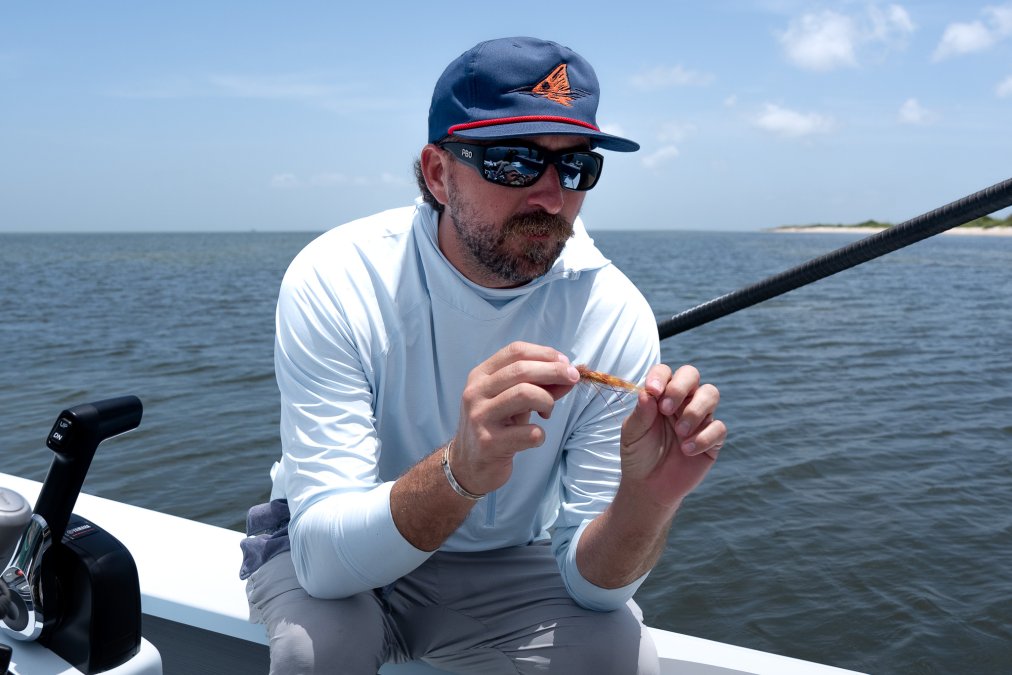
Most anglers think a light-colored cotton tee will keep them cool. It won't, cotton holds water, and once soaked it stops breathing and clings. Shirts that work in extreme heat use synthetic fibers with specific structural properties.
UPF Sun Protection Ratings and What They Actually Block
UPF, or Ultraviolet Protection Factor, measures how much ultraviolet radiation a fabric blocks. UPF 50+ lets roughly 1/50th of UV through, blocking about 98%; UPF 30+ blocks approximately 96% (skincancer.org).
The Skin Cancer Foundation's sun protection guidance notes that clothing is one of the most reliable forms of UV defense, since it doesn't wash off or need reapplying. That matters when you're on the water for eight hours with reflected glare coming off both the sky and the surface.

Fabric construction drives the rating: tight weaves, darker dyes, and synthetics like polyester rate higher than loose knits or natural fibers. Stretch fabrics lose protection when pulled taut, which is why quality sun-shielding apparel specifies its rating on the garment.
Breathability, Ventilation, and Moisture-Wicking Fabric Technology
Breathability and moisture-wicking solve different problems.
Moisture-wicking fabric moves sweat to the outer surface, where it evaporates faster. Breathability determines how easily air and vapor pass through, a shirt can wick well and still feel stifling if it doesn't breathe. Mesh panels and back vents add mechanical airflow on top of both.
The best cooling comes from all three working together. Polyester and spandex blends dominate because they're hydrophobic, they don't absorb water the way cotton does. Add four-way stretch and the shirt moves with you through a cast instead of binding at the shoulders.
Pro TipCheck where the ventilation actually sits. Mesh panels under the arms and across the upper back do the most work because those are the highest-heat zones during a cast. Decorative venting on the chest looks technical but adds little.
UPF Sun Protection Fishing Shirts: What the Numbers Mean
UPF sun protection fishing shirts carry a rating that tells you how much UV gets through. The scale runs from UPF 15 to UPF 50+, the highest standardized rating available.
Here's how the ratings compare:
UPF Rating |
UV Blocked |
Protection Level |
Best For |
|---|---|---|---|
UPF 15-24 |
~93-96% |
Good |
Short exposures, low UV |
UPF 25-39 |
~96-97% |
Very good |
Extended time outdoors |
UPF 40-50 |
~97.5-98% |
Excellent |
Full days on the water |
UPF 50+ |
98%+ |
Maximum |
All-day sun, reflective glare |
The number is only half the story. How a fabric earns its rating determines whether protection lasts.
Mechanical UPF vs. Chemical-Treated UPF
There are two ways a shirt reaches its rating, and they age very differently.
Mechanical (inherent) UPF comes from the fabric's physical structure: tight weave, fiber type, yarn denier, and dye color. Denser weaves leave less open space for UV photons; darker dyes absorb more UV; polyester and nylon absorb UVA and UVB better than cotton or rayon. Because the protection is structural, it doesn't wash out, the shirt protects as well in year three as in week one, as long as the fabric isn't worn thin or stretched.
Chemical-treated UPF uses a finish applied after weaving, often UV-absorbing compounds or optical brighteners. It can push a lighter, more breathable fabric to a higher rating than its weave alone would earn, but treatments degrade with washing, abrasion, and chlorine, and the rating can drop meaningfully over a season of heavy use.
For anglers who fish hard and wash often, mechanical UPF is durable. Treated UPF suits those who want maximum breathability in a lighter fabric and don't mind replacing shirts more often.
What Degrades a Rating Over Time
Three things pull a UPF rating down:
- Stretching, when fabric is pulled taut across shoulders or knees, the weave opens and more UV passes through. This is why stretch panels often carry a lower effective rating than the body fabric.
- Wear and abrasion, fibers thin with repeated washing, rod-butt contact, and pack straps.
- Wetness, counterintuitively, many fabrics increase UV protection when wet because water fills the gaps between fibers, but stretch fabrics under tension can go the other way.
A shirt rated UPF 30+ that's been stretched across your shoulders all season may not hold that number.
How to Verify a UPF Claim
Look for the rating printed on the garment or hangtag. If a brand doesn't state one, assume no testing was done. The FTC's guidance on textile labeling requires that sun-protective claims be backed by testing, so a legitimate rating should be verifiable. The testing standard most U.S. manufacturers reference is AATCC 183 or ASTM D6603, which measure UV transmission through fabric in a lab.
Watch OutA UPF rating is measured on new, unstretched fabric. Real-world protection on a shirt that's been worn hard for two seasons may be lower than the tag says. If sun protection is your primary concern, consider replacing heavily used shirts every couple of seasons.
Matching the Rating to the Trip
- All-day open water, reflective glare, tropical sun: UPF 50+, mechanical if you can find it.
- Morning or late-afternoon sessions, partial shade: UPF 30+ is usually sufficient.
- Multi-day trips with limited laundry: mechanical UPF holds up better across repeated washes.
- High-stretch panels (shoulders, underarms): assume a lower effective rating and consider a base layer underneath for extended exposure.
The rating is a starting point. How it was achieved and how you'll use the shirt determine whether it protects you.
Best Cooling Fabrics for Anglers: Polyester, Spandex, and Bamboo Blends
Cooling performance isn't a property of a fiber name, it's a property of how that fiber is spun, knit, and finished. Two shirts can both say "100% polyester" and perform completely differently.
How Moisture-Wicking Actually Works
Wicking is capillary action: sweat enters through tiny gaps between fibers, travels along the fiber surface to the outer face, and evaporates there. The fabric channels water rather than absorbing it. That's why hydrophobic synthetics (polyester, nylon, polypropylene) wick well and cotton doesn't, cotton's cellulose bonds with water molecules and holds them, so a soaked cotton tee stays heavy and stops breathing.
Three construction variables drive wicking speed:
- Denier, the thickness of individual filaments. Lower denier (finer filaments) creates more surface area per gram of fabric, which moves moisture faster. Most performance fishing shirts sit in the 50-150 denier range.
- Knit structure, a jersey knit wicks in one direction; a mesh or birdseye knit creates channels that move vapor laterally as well as outward.
- Fiber cross-section, some polyester filaments are extruded with a star or trilobal cross-section rather than a round one, which multiplies the capillary surface area without adding weight.
Polyester, Spandex, and the Blend Math
Polyester is used for hot-weather fishing because it's hydrophobic, abrasion-resistant, and holds a UPF rating well. Spandex (elastane) adds four-way stretch so the shirt moves through a full cast without pulling at the shoulders. Most performance shirts blend the two at 85-90% polyester / 10-15% spandex.
Nylon shows up in saltwater-ready pieces because it resists abrasion and repeated salt exposure, though it's slightly less UV-stable than polyester.
Bamboo, Tencel, and the Natural-Fiber Question
Bamboo viscose is soft, quiet, and naturally temperature-regulating, useful when stalking fish in shallow water and you don't want fabric rustle spooking them. It's less abrasion-resistant than polyester, so it suits skiff days and travel better than heavy brush or rock-hopping. Tencel (lyocell) behaves similarly and uses a closed-loop solvent process that recovers most of the chemical input.
Quick-Dry Performance Materials and Hydrophobic Finishes
Quick-dry performance comes down to how little water the fabric holds. Hydrophobic finishes push water off the surface rather than letting it soak in, so after a wave over the bow or a deep wade, the shirt is wearable again in minutes instead of heavy and cold for an hour.
The trade-off: hydrophobic treatments can wash out. Garments that build water resistance into the fiber itself, through cross-section geometry or inherently hydrophobic polymers, may hold performance longer than surface-coated fabrics. Read the care label: most treated fabrics lose effectiveness with fabric softener and high heat.
Pro TipA quick field test: drip a few drops of water on the inside face of the fabric. If they bead and roll, the finish is intact. If they spread and darken the fabric, the DWR is spent and the shirt will feel clammy once you sweat.
What to Look For on the Tag
A few markers separate a real performance shirt from a marketing one:
- Fiber content listed by percentage, not just "polyester blend."
- A stated UPF rating printed on the garment, not just the hangtag.
- A knit description, mesh, birdseye, or jersey, rather than vague "breathable fabric" language.
- Care instructions that don't require softener or high heat, which signals the manufacturer expects the finish to last.
If a shirt can't tell you what it's made of and how it's rated, assume neither claim was tested.
How to Choose Fishing Apparel for Summer: A Practical Framework
Choosing fishing apparel for summer means matching fabric and design to your actual conditions, not a general "hot weather" label.
Work through these in order:
- Sun exposure: All-day open water needs UPF 50+. Morning-only trips can work with UPF 30+.
- Activity level: Wading and poling generate more sweat than sitting at the console. Higher activity favors maximum breathability and wicking.
- Water contact: Wade fishing and wet decks argue for quick-dry and hydrophobic finishes.
- Coverage preference: Long sleeve and hooded designs protect more skin; short sleeve and crew necks feel cooler but expose more.
- Durability needs: Guides and heavy-rotation anglers should prioritize abrasion-resistant weaves over lightweight comfort.
Long Sleeve vs. Short Sleeve and Hooded vs. Crew Neck Designs
Long sleeve shirts win on the water in most conditions, which surprises people. Full arm coverage blocks UV directly, and a loose long-sleeve in a breathable fabric often feels cooler than bare skin under direct sun because it shades the skin and lets moving air carry heat away.
Short sleeve makes sense for early mornings, overcast days, or when you want maximum airflow and don't mind reapplying sunscreen to your forearms.
Hooded designs extend coverage to the neck and ears, the two spots anglers most often miss, and a crossover collar keeps the hood in place when you turn to look behind the boat. Crew necks are lighter but leave the back of your neck exposed unless you add a gaiter or buff.
Key TakeawayFor most full-day saltwater trips, a long-sleeve hooded shirt in a UPF 50+ polyester-spandex blend is a protective and comfortable choice. Short sleeve and crew neck are warm-weather alternatives.
Fit, Mobility, and Casting Comfort for Different Body Types
Casting mobility depends on cut, not just fabric. A shirt that fits well through the shoulders and chest lets you reach full extension on a backcast without the hem pulling out or the fabric binding across your back.

Four-way stretch and raglan sleeve construction both help. So does an ergonomic fit that follows the body's shape rather than hanging boxy. Thumbhole cuffs keep sleeves from riding up during a cast and protect the back of your hands.
Body type changes the recommendation:
- Broad shoulders and chest: Look for stretch and a cut that doesn't pull across the back. Raglan sleeves distribute tension better than set-in sleeves.
- Longer torso: A slightly longer hem stays tucked through a full casting motion.
- Shorter frame: Standard cuts often run long. A trimmer fit avoids excess fabric catching wind.
Ordering online makes fit the biggest risk. Measure against a shirt you already own rather than guessing, and a generous return policy removes most of the remaining risk.
Stain, Odor, and Saltwater Resistance: What Holds Up Over a Season
Salt is the real test: it's abrasive, corrodes hardware, and leaves residue that stiffens fabric if you don't rinse. Shirts built for saltwater use tighter weaves and abrasion-resistant fibers that may hold their structure through repeated exposure.
Stain resistance usually comes from a finish that lets fish blood, bait, and sunscreen rinse out instead of setting in. Anti-microbial treatments limit odor-causing bacteria, which matters on multi-day trips when you wear the same shirt more than once.
A common mistake is machine-drying performance shirts on high heat. That's what breaks down finishes and shrinks stretch fabrics. Cold wash, hang dry, skip the softener.
Watch OutFabric softener coats the fibers and blocks moisture-wicking. One wash with softener can noticeably reduce how well a performance shirt moves sweat. If your shirt suddenly feels clammy, that may be the cause.
Chemical-Free vs. Treated UV Protection and Environmental Trade-Offs
There are two ways a shirt earns its UPF rating, and the difference matters for longevity and environmental impact.
Chemical-free protection comes from the fabric itself: tight weave, fiber type, and color. It never washes out because it was never added.
Treated protection uses a finish applied to the fabric, sometimes with added chemicals. It can push a lighter fabric to a higher rating, but degrades with washing and wear.
On the environmental side, synthetics like polyester and spandex are petroleum-derived and shed microplastics during washing. Bamboo blends and recycled synthetics reduce the footprint, though bamboo processing has its own impact. There's no zero-impact option, only trade-offs.
The practical takeaway: chemical-free protection may last longer and avoids the question of what's in the finish. Replacing treated shirts every season means buying more and discarding more.
Layering Systems for Variable Weather on the Water
Coastal mornings start cool and end hot. A layering system handles that swing without forcing one shirt for the whole day.
The base layer is your performance fishing shirt, worn against skin for wicking and sun protection. Over it, add a lightweight long-sleeve or hoodie for cool mornings or wind, something you can peel off and stow once the sun climbs. For wet or windy conditions, a packable shell sheds spray without adding heat.
Each layer does one job: a base layer that wicks, a mid layer that insulates or blocks wind, and a shell that repels water. Cotton has no place in any of them.
This also stretches your gear budget: one good base layer plus a versatile mid layer covers more conditions than three single-purpose shirts.
The gap between a shirt that works and one that doesn't shows up around hour six, when the sun is high, the sweat is steady, and the fish are still tailing. Bay Flats Apparel builds coastal gear for exactly that moment, with BAY FLATS AIRFLOW Technology for breathability, UPF 30+ protection across the lineup, and features like thumbhole cuffs and crossover collars that stay put through a full cast. From the $65 Airflow Fishing Hoodie to the $95 Long Sleeve Airflow Pearl Snap, every piece is made to handle salt, sun, and a long season on the water. Shop All and gear up for where you fish.

Frequently Asked Questions
Do fishing shirts really keep you cool in hot weather?
Yes, when they're built with the right fabrics. Performance fishing shirts use moisture-wicking polyester and spandex blends that pull sweat away from your skin and spread it across the fabric surface for faster evaporation. Mesh panels and ventilation features add airflow. The key is choosing a shirt with UPF protection, quick-dry materials, and breathable construction rather than a standard cotton tee that holds moisture and blocks almost no ultraviolet radiation.
What UPF rating should I look for in sun protection fishing shirts?
Look for UPF 30+ at minimum and UPF 50+ for extended exposure. UPF 30 blocks roughly 97% of UV radiation, while UPF 50+ blocks about 98%. For long days on the water in summer, UPF 50+ is the safer choice, especially on your shoulders, arms, and neck. Long-sleeve designs with hoods or gaiters give you coverage without needing to reapply sunscreen every two hours.
What is the best fabric for hot weather fishing shirts?
Polyester blends with spandex or elastane offer the best combination of moisture-wicking, four-way stretch, and quick-dry performance. Bamboo blends are a strong alternative for anglers who want a softer, cooler feel with natural odor resistance. Avoid cotton, which soaks up sweat, dries slowly, and offers minimal sun protection when wet. The best cooling fabrics for anglers balance lightweight construction with durability against saltwater and abrasion.
How do I choose fishing apparel for summer without overspending?
Start with one or two long-sleeve UPF 50+ shirts that cover your arms and neck, then add a short-sleeve option for cooler mornings or lodge wear. Focus on fit and mobility first: you need four-way stretch and room to cast without the shirt pulling across your back. Look for stain-resistant and anti-microbial finishes if you fish multiple days per week. Bay Flats Apparel offers performance options from $65 to $95 that are built specifically for saltwater conditions.


